
What Is the Best Way to Make a Random Object?
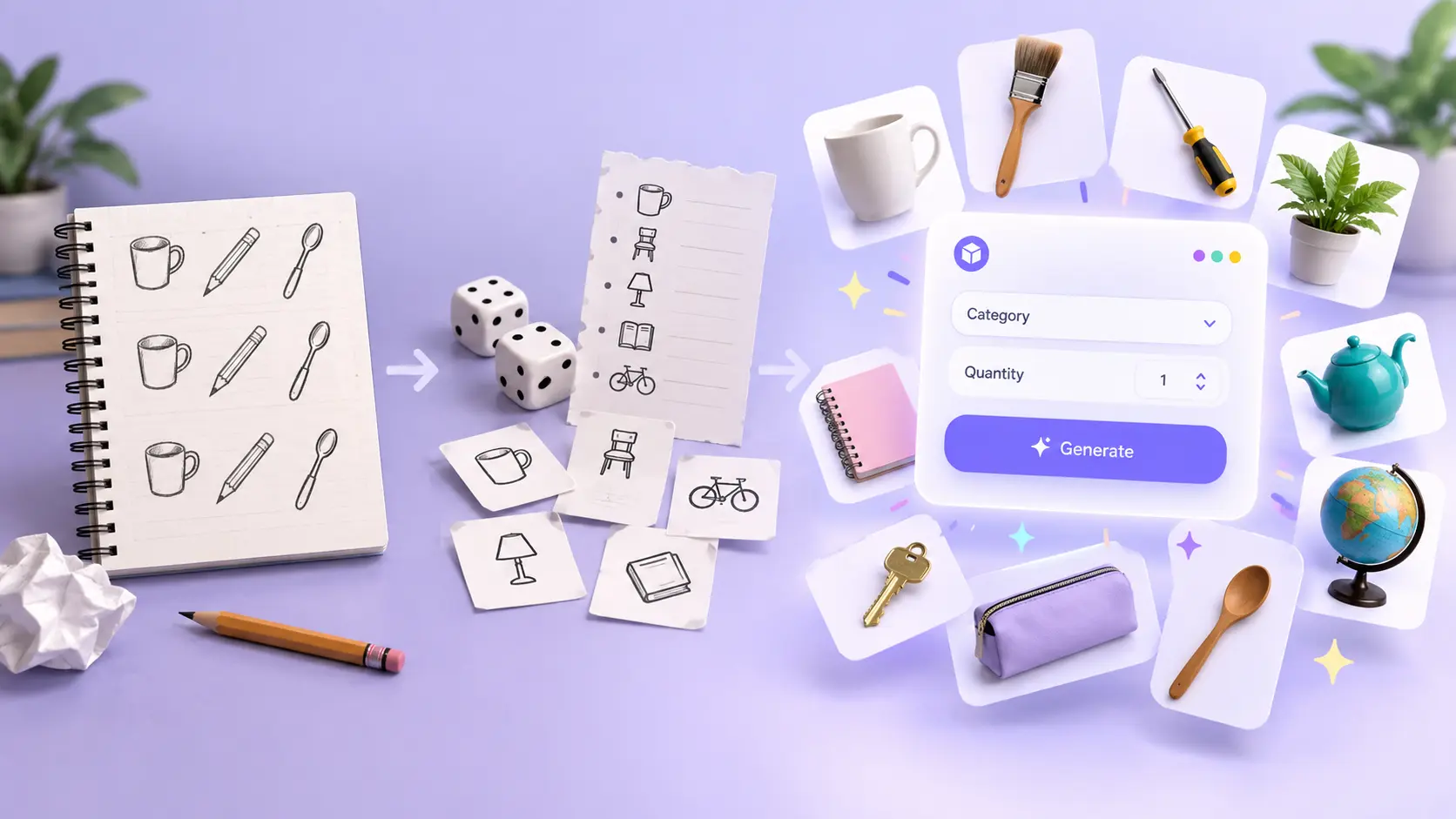
Ever needed a random, everyday object out of nowhere? Maybe you’re sketching, writing a story, running a game night, teaching a class, or just trying to shake up a boring afternoon. Whatever the reason, coming up with something truly random on your own is a lot harder than it sounds. Your brain has a habit of reaching for the same handful of things every time, whether that’s a coffee mug, a pencil, or whatever object happens to be sitting on your desk right now.
That’s where a bit of outside help comes in handy. There are several different ways to land on a random object, and they are not all created equal. Some take real effort and still end up biased, while others give you a genuinely fair result in a couple of seconds. In this post, we’ll walk through the common methods people use, explain why some fall short, and look at what actually gets you a fair, varied result without wasting your time or overthinking it.
Common Ways to Pick a Random Object
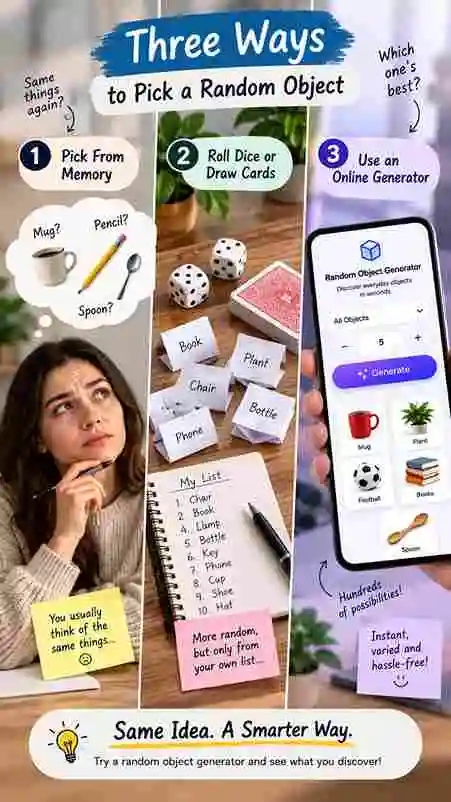
Just Picking One From Memory
This is by far the easiest option, and also the least random one available. When you try to think of a random object on the spot, your mind almost always lands on something nearby, something you saw recently, or something you used the last time you tried this same exercise. Psychologists call this a kind of availability bias, where the easiest thing to recall feels random simply because it came to mind quickly.
Using an Online Generator
An online random object generator sidesteps both of these problems at once. Instead of relying on your own memory or a list you built by hand, it pulls from a large, ready made library of everyday things, often covering hundreds of objects across dozens of categories. That means you’re not limited by what you personally could think up under pressure, and the actual selection is handled by the tool itself, so the outcome is genuinely randomized behind the scenes rather than shaped by whatever crossed your mind first.
So What Is the Best Way?
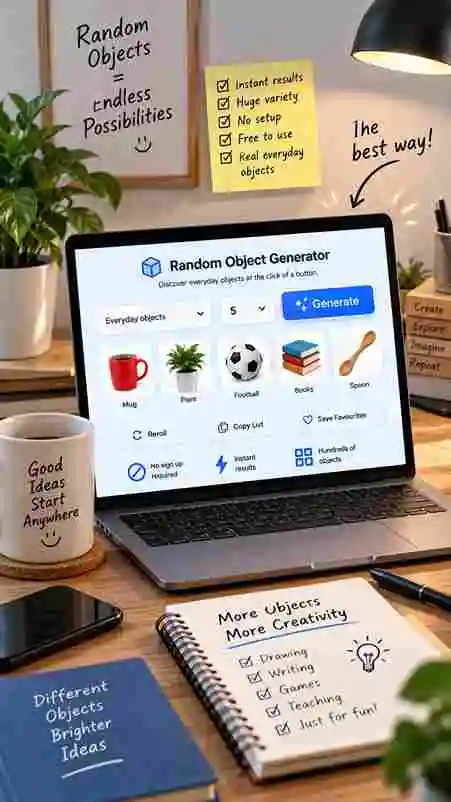
Taking all of that into account, an online generator really is the best way for most people, most of the time. It removes the guesswork completely, it’s instant, and it draws from a much bigger and more varied pool of objects than anyone could realistically list off the top of their head in a minute or two. There’s also no setup involved, which matters a lot when you just want a quick answer and don’t want to spend ten minutes building a list before you can even start.
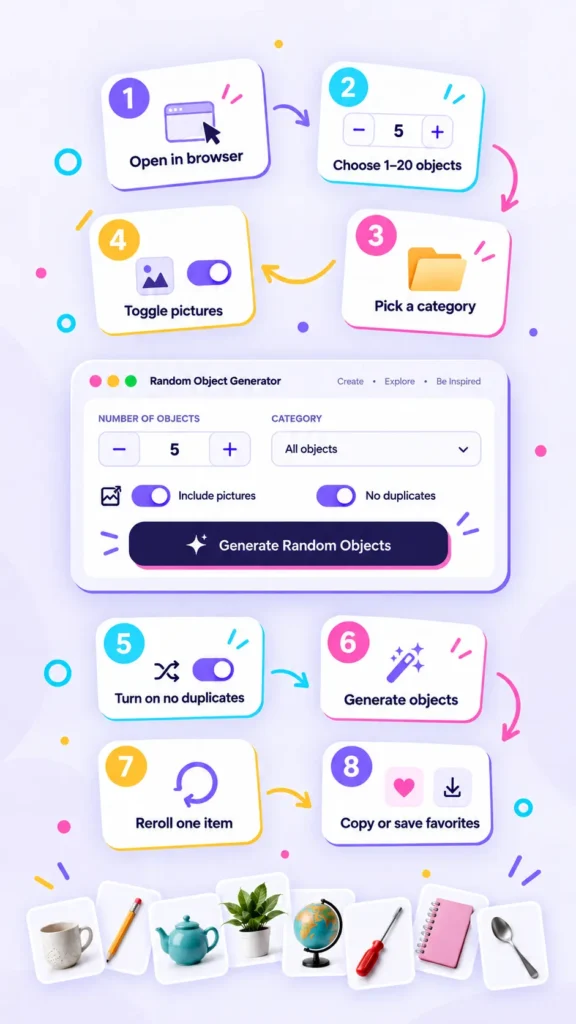
A tool like Random Object Generator is a good example of this done well. You simply pick how many objects you want, anywhere from one to twenty, choose a category if you have something specific in mind, and it hands you real, tangible things such as a coffee mug, a screwdriver, a paintbrush, or a tape measure, often with a matching picture right alongside the name. There’s no sign up required and nothing to install, so the tool stays out of your way and just gives you a clean result whenever you need one. You can also reroll individual objects you don’t like, copy the whole list, or save favourites for later, which makes it flexible enough for repeated use rather than a one time novelty.
Ready to rummage?
Spin up a batch of random objects right now — no sign-up, no waiting.
Tips for Getting Better Random Results
If you want your random object picks to actually feel useful for whatever you’re doing, rather than just random for the sake of it, a few small habits make a real difference over time.
- Pick a category if you already have a specific use in mind, like drawing practice, a kitchen themed party game, or a workshop scavenger hunt
- Turn on pictures if you want a visual reference to work from, which is especially handy when you’re sketching or teaching younger learners
- Generate more than one object at a time so you end up with a small batch of options to choose from instead of committing to a single result
- Use unique mode so you don’t end up with duplicate objects showing up in the same batch, which can happen more often than you’d expect
- Save the objects you like along the way so you can come back to a favourite later without starting over from scratch
- Keep the settings on “all objects” whenever you want maximum surprise and variety rather than narrowing things down too early
- Copy the full list in advance when you’re prepping material for a classroom activity or a game night, so everything is ready before people arrive
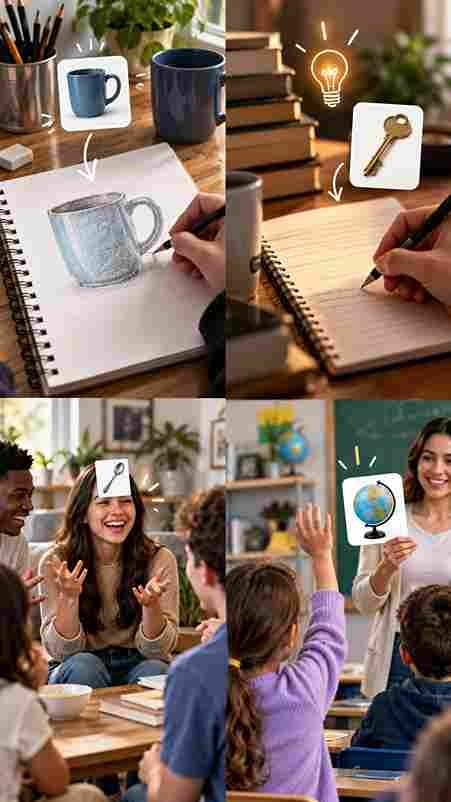
Creative Ways to Use Random Objects
Random objects aren’t just a fun novelty to play with once and forget about, they’re genuinely useful across a surprising number of everyday situations. Artists in particular use them to break out of drawing the same handful of subjects over and over again, since a surprise object forces new angles, new proportions, and new ways of thinking about light and shadow that a familiar subject never would.
Writers lean on them just as much, if not more. Dropping a random, unexpected object into a scene, a poem, or a piece of worldbuilding is a simple but surprisingly effective trick for pushing past writer’s block. It often leads a story somewhere the writer wouldn’t have planned on their own, simply because the object forces a new decision that wasn’t part of the original outline.
They also work extremely well in group and classroom settings. Charades, Pictionary, scavenger hunts, and vocabulary practice for language learners all benefit from having a quick, ready-made object to build a round around, especially when there’s no time to prep material by hand beforehand.
Good questions
Frequently asked
Using an online generator is by far the fastest option available. You set a few preferences, hit generate, and get a result in seconds, with no list building or setup required on your end.
Good ones use pseudorandom selection across a large library of eligible objects that match your chosen settings, which is more than random enough for everyday creative or entertainment use, though not intended for cryptographic purposes.
Yes, most generators let you narrow results down to a specific category so the objects you get actually fit whatever project, game, or lesson you’re working on at the time.
Yes, it works especially well for vocabulary practice, ESL lessons, and quick classroom games, since it gives students something concrete and visual to name, describe, or build a sentence around.
Not usually. Most generators, including Random Object Generator, work right in your browser without any account, and your saved items and preferences simply stay stored locally on your own device.